
 VSA Signature Blends
 Powder spices
 Whole Spices
Whole Spices vs Ground Spices: Which One Should You Use and When?
Every Indian kitchen has two kinds of masala jars. One holds whole jeera, laung, elaichi — seeds and bark in their original form. The other has ground turmeric, coriander powder, red chilli. Both live on the same shelf, but they do completely different jobs in your cooking.
If you have ever wondered why your dal tadka tastes flat sometimes, or why restaurant biryani smells so much more alive than the one made at home — the answer often comes down to which type of spice you used, and when.
This guide breaks it down simply, with real cooking examples from everyday Indian dishes.
What Actually Happens When a Spice is Ground?
Before getting into the “which one” question, it helps to understand what grinding actually does.
Whole spices are sealed units. The essential oils — the compounds responsible for aroma, flavour and colour — are locked inside the seed, bark or pod. They stay there, protected, until you crack, crush or cook the spice.
The moment a spice is ground, those oils are exposed to air. Oxidation begins immediately. A freshly opened jar of ground cumin smells intense and sharp. The same jar six months later? Pale, dusty, almost flat.
Whole spices can stay potent for up to two years when stored properly. Ground spices peak between six and twelve months. That gap in shelf life is the single biggest reason experienced cooks keep both on hand — and choose between them deliberately.
When to Use Whole Spices
Whole spices are at their best when they have time and heat to open up.
Tadka / Tempering
This is non-negotiable. When you drop mustard seeds, jeera or curry leaves into hot ghee or oil, they pop, sizzle and release their oils directly into the fat. That fat then carries the flavour through the entire dish. Ground spices cannot do this — they burn and turn bitter within seconds in hot dry oil. Example: Dal tadka, rajma, sabji — the base always starts with whole spices in hot ghee.
Slow-Cooked Dishes & Biryani
A whole elaichi, a piece of dalchini, a few cloves in a biryani pot — these release flavour slowly over long cooking time. By the time the rice is done, the aroma has worked its way through every grain. You cannot achieve that depth with powder.
Example: Chicken biryani, mutton curry, nihari — the long cook time is what allows whole spices to fully open.
Chai
A few crushed cardamom pods, a small piece of ginger, maybe a clove or two — whole spices brewed into chai give a layered warmth that pre-mixed masala chai powder simply cannot replicate. The slow release in simmering milk is what makes the difference.
Pickling (Achar)
Whole spices — methi seeds, mustard seeds, saunf — are standard in achar and preserves. They flavour the oil without clouding it, and they last the entire duration of the preservation process.
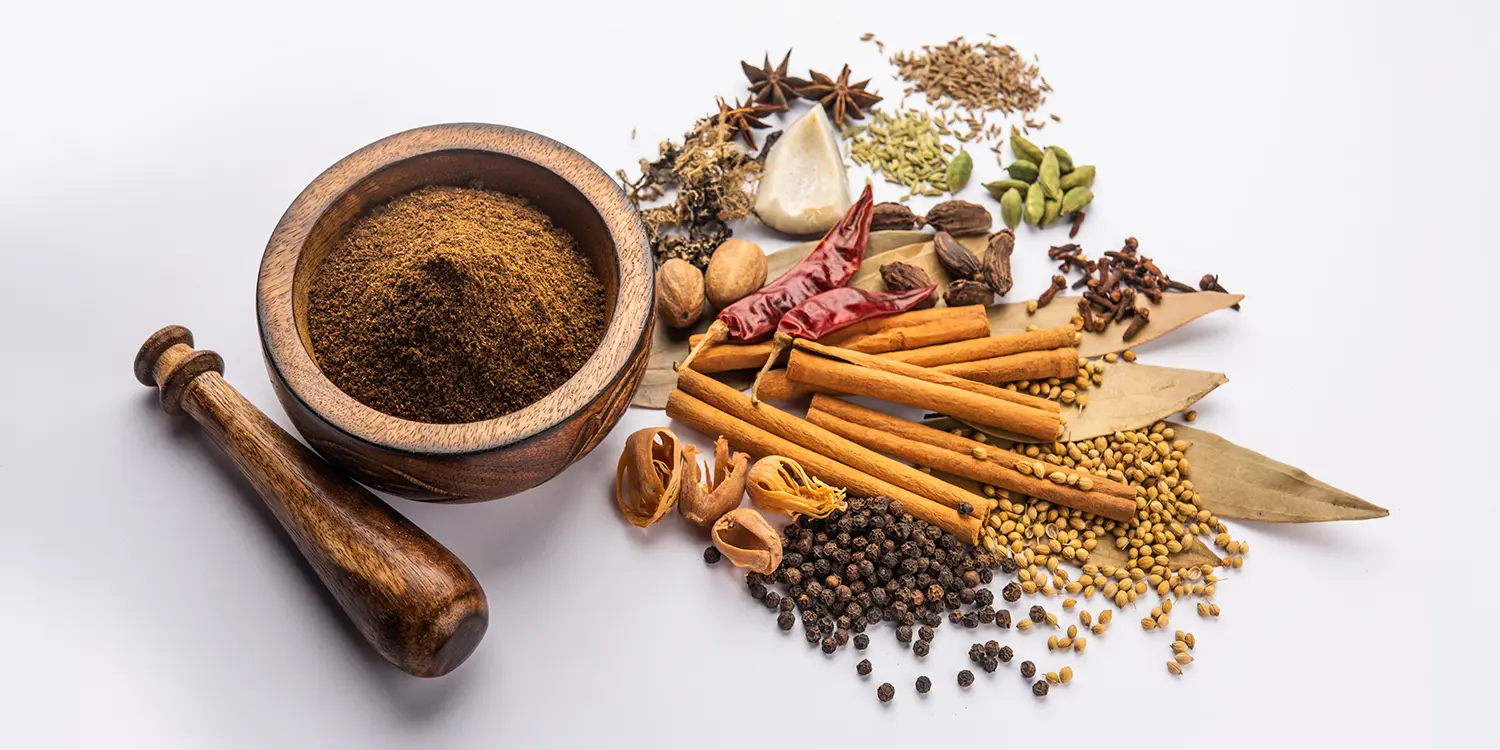
When to Use Whole Spices
Ground spices are built for speed, coating and finishing.
Quick-Cooking Dishes
When you are making a 20-minute sabji or a stir fry, there is no time for whole spices to release their flavour. Ground coriander, turmeric and red chilli powder integrate immediately into the masala base.
Even Flavour Distribution
In a curry gravy, dal or soup where you want uniform flavour throughout, ground spices blend invisibly. No one wants to bite into a whole clove buried in their sabji.
Marinades and Rubs
Ground spices coat surfaces evenly. A chicken tikka marinade works because the powder clings to the meat and penetrates during marination. Whole spices cannot do this job.
Finishing a Dish
Garam masala sprinkled over a finished paneer butter masala. Chaat masala over fruit chaat or pav bhaji. Kashmiri mirch powder stirred in at the end for colour — these are all ground spice moments. The dish is already cooked; you are adding a final layer of aroma or colour at the end.
The Smart Move — Use Both Together
Most real Indian recipes use both forms at different stages — and that is not an accident.
Here is how it works in a classic dal:
- Whole jeera and mustard seeds go into hot ghee for the tadka base
- Ground turmeric and coriander powder go into the onion-tomato masala
- Garam masala (ground) gets added right before serving
Each stage uses the right form for the right purpose. The whole spices build the aromatic base. The ground spices create the body of the curry. The finishing masala lifts the aroma at the end.
This is the layering technique that separates a flat curry from one that has depth.
Shelf Life and Storage — A Quick Reference
| Whole Spices | Ground Spices | |
|---|---|---|
| Shelf Life | Up to 2 years | 6–12 months |
| Aroma Retention | High | Fades faster |
| Best Storage | Airtight container, away from moisture | Airtight, dark and dry |
| Freshness Test | Rub between fingers — should smell strong | Pinch and smell — if flat, replace it |
The practical tip: buy whole spices in reasonable quantities and grind only what you need. Freshly ground cumin for your dal tastes dramatically better than powder sitting in a jar for eight months.
Frequently Asked Questions
Whole spices are seeds, bark, pods or roots in their natural form — like cumin seeds, cinnamon sticks or cardamom pods. Ground spices are the same ingredients dried and milled into powder. Whole spices keep their essential oils locked inside and stay fresh for up to two years. Ground spices release aroma immediately but lose potency faster, usually within six to twelve months.
Neither is better — they serve different purposes in cooking. Whole spices are better for tempering (tadka), slow-cooked dishes and biryani, where they release flavour gradually over time. Ground spices are better for quick curries, marinades and finishing a dish. Most authentic Indian recipes use both at different stages to build layered flavour.
Yes, but the flavour and texture will differ. As a general rule, use ¼ to ½ teaspoon of ground spice for every teaspoon of whole spice the recipe calls for. Ground spices integrate faster but will not give you the same base aroma as whole spices tempered in hot oil. For best results, use each form where the recipe intends.
The essential oils in whole spices are fat-soluble, not water-soluble. When you add whole cumin, mustard seeds or curry leaves to hot ghee or oil, the fat extracts and carries those aromatic oils through the entire dish. This is the foundation of tadka. Ground spices added to very hot dry oil will burn quickly and turn bitter.
Ground spices typically peak between six and twelve months. After that, the flavour fades noticeably because the milling process exposes essential oils to air and oxidation begins immediately. Store them in airtight jars, away from heat and moisture. Buy in smaller quantities and replace regularly for the best flavour in your cooking.
When you grind a whole spice fresh, you crack open its natural structure and release the full concentration of aromatic oils at that moment. Pre-ground spices in packets have often been milled, packed, transported and stored for months before reaching your kitchen — losing a significant portion of their aroma along the way. Fresh grinding makes a noticeable difference, especially with cumin, coriander and garam masala.
At minimum, an Indian kitchen should keep: jeera (cumin seeds), rai (mustard seeds), laung (cloves), elaichi (cardamom pods), dalchini (cinnamon sticks), tejpatta (bay leaves), kali mirch (black peppercorns), and methi dana (fenugreek seeds). These form the base of tadka and slow-cooked dishes across most regional Indian cuisines. VS Agro’s whole spice range covers all of these — natural, no additives, packed in-house.
Yes. All VSA Naturals whole spices are manufactured and packed at the VS Agro facility in India with no artificial colour, no preservatives and no additives. Every product is FSSAI compliant. Because VS Agro processes and packs in-house with no third-party involvement, quality stays consistent from sourcing through to the final pack.
You can order VSA whole spices and VSA Signature Blend masalas directly from vsagro.co.in. Free delivery on orders above ₹499, with an additional 20% discount. All products are manufactured at VS Agro’s own manufacturing facility. VSA masala is also available on Amazon, Flipkart, Jiomart and store near you.
The Simple Rule to Remember
If the dish is slow and needs depth — start with whole spices. If the dish is fast and needs coverage — reach for ground. If it is a proper Indian curry — you probably need both.
Understanding this one distinction will change how your food tastes. Not because you bought expensive ingredients, but because you used what you already had, correctly.